Visibility & SEO
SEO and AI search in 2026: sensible steps for small businesses
How small businesses can support visibility in traditional search and AI answers in 2026 with useful content, technical basics, local information, and realistic measurement.
by Nguyen VoPublished on 5 min read
Key takeaways
- Classic search and AI answers share the same foundation: helpful content, reliable business data and a technically clean website.
- There is no trick for AI recommendations. Rely on robust fundamentals and check the results regularly.
- A fixed rhythm beats one-off actions: a few measures, checked regularly, achieve more than one big push.
Contents
People still discover information through traditional search engines, but they also ask AI assistants for explanations, recommendations, and providers. This is not a reason for small businesses to abandon SEO. A better approach is to make the website a reliable, well-organised source for people and different discovery systems.
This article focuses on practical priorities for 2026. It does not promise inclusion in AI answers or a particular Google position. Systems, features, and measurement options evolve, so businesses should focus on durable foundations and review results regularly.
1. Not “SEO or AI search”—build discoverability
Traditional search engines and AI answer systems differ in how they present information and select sources. Both can benefit from a website that is accessible, understandable, and clear about its subject.
The key question is not “What AI trick should my business use?” It is: Can a person—or an automated system—clearly understand what I offer, where I operate, and why my information is credible?
2. The fundamentals still matter
A clear page for each key service
Describe important services on dedicated, accessible pages. Use specific, natural terms customers actually use. Explain what is included, how the service works, who it is for, and what to do next. Avoid interchangeable copy that merely swaps city names or keywords.
Clear business information
Make it easy to identify who provides the service, how to contact the business, and where it operates. Keep relevant website and business-profile details consistent. Update hours, services, and contact options when they change.
Technical accessibility
Important content should be available without unnecessary technical barriers. Check mobile usability, internal links, status codes, indexing directives, and relevant structured data. Structured data may help systems interpret content; it does not guarantee a special search feature or inclusion in AI answers.
Helpful, credible content
Answer real customer questions with concrete information. Show relevant experience, genuine examples, and clear limits to your services. Update content that includes changing prices, policies, availability, or other time-sensitive details.
3. Write for questions, not supposed AI keywords
Customers may ask:
- Which service fits my situation?
- What happens during an appointment?
- What does it cost, and what is included?
- Where does the provider operate?
- What should I know before booking?
Answer these questions on relevant pages in a clear structure. A concise, direct section may be more useful than a long article that buries the answer. Use FAQs only when the questions genuinely help your audience—not as a keyword dump.
4. Maintain local visibility responsibly
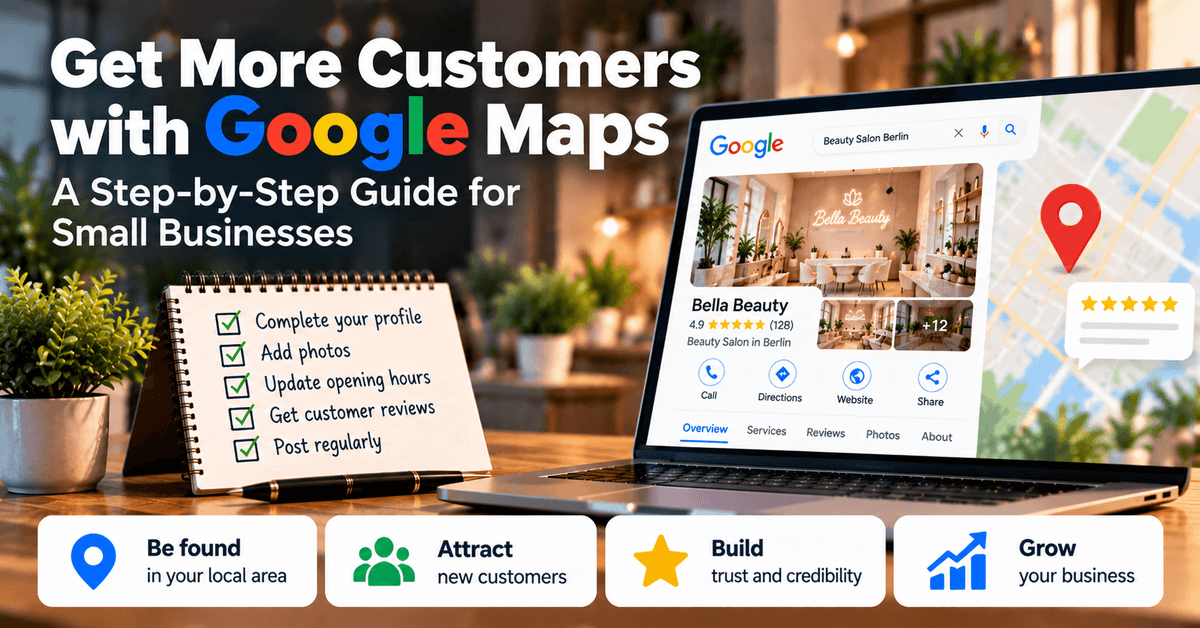
Accurate business details, relevant service pages, customer reviews, and a maintained business profile remain useful for local businesses. Ask real customers for honest feedback in an appropriate way. Do not fabricate reviews, locations, or partnerships.
If you serve multiple areas, explain where and how you actually work. Do not automatically create near-identical pages for every town if there is no distinct service there.
5. Don’t treat AI crawlers and access as one-size-fits-all
AI and search systems do not all use the same crawlers, rules, or sources. Review the official documentation for services relevant to your business before changing access settings. Do not allow or block everything based on a single generic tip. Consider security, privacy, server load, and whether you want your content used in that way.
A technically accessible site is not automatically cited or recommended by every system.
6. Measure outcomes realistically
Track multiple signals rather than relying on one AI answer or daily rank check:
- organic clicks and impressions in Search Console,
- enquiries, calls, or bookings from relevant channels,
- pages that actually support leads or sales,
- technical errors and indexing status,
- occasional documented samples of how your business appears for relevant questions.
AI answers can vary by query, location, time, and user context. One-off observations are not a reliable ranking table. Treat tests as samples and compare trends over time.
7. A 30-day plan for small businesses
Week 1 — Check the basics: Review Search Console, key URLs, mobile usability, contact paths, and business information.
Week 2 — Improve service pages: Update your two or three most important service pages. Clarify what you provide, the process, the intended customer, and next steps.
Week 3 — Answer customer questions: Gather recurring real questions from conversations and emails. Add useful answers to the relevant pages.
Week 4 — Measure and adjust: Record baseline metrics and check whether visits, qualified enquiries, or technical signals change. Use the evidence to choose the next improvement.
A 90-minute routine for every quarter
Block ninety minutes once a quarter:
- 20 minutes data: open Search Console and compare clicks, impressions and top pages with the previous quarter.
- 20 minutes content: update prices, opening hours, services and contact paths. Rework or remove outdated pages.
- 15 minutes technology: check mobile display, loading time and indexing of the most important pages.
- 15 minutes business data: check your Google Business Profile and directories for identical details.
- 20 minutes AI test: ask the same five questions to an AI assistant and note changes.
Record what you changed. That makes it easier to match cause and effect later.
Conclusion
2026 is not a reason to chase every new SEO claim. Small businesses should keep their websites clear, accessible, useful, and current. These foundations support traditional search and may help AI systems interpret the business—without guaranteeing a mention or position.
Further reading:
- Google Search Central — SEO Starter Guide: https://developers.google.com/search/docs/fundamentals/seo-starter-guide
- Google Search Central — Helpful, reliable, people-first content: https://developers.google.com/search/docs/fundamentals/creating-helpful-content
- Google Search Central — Structured data: https://developers.google.com/search/docs/appearance/structured-data/intro-structured-data
- OpenAI — Search and publisher information: https://openai.com/
Frequently asked questions
Do I need to rebuild my website for ChatGPT or other AI systems?
No. Start with clear information, accessible pages, useful content, and accurate business details. Add technical changes only when they serve a concrete purpose.
Does schema markup guarantee an AI recommendation?
No. Structured data can make content more machine-readable, but it does not guarantee rankings, mentions, or recommendations.
Should I write a separate blog post for every question?
Not necessarily. Group closely related questions on a relevant, well-organised page. Create a separate article when a question represents a distinct topic with enough value.
How can I tell whether AI search brings customers?
Use referral and conversion data where available, and ask customers how they found you. Do not rely solely on isolated manual tests.